Phone Number
+91 8111002343

Get Free Quote
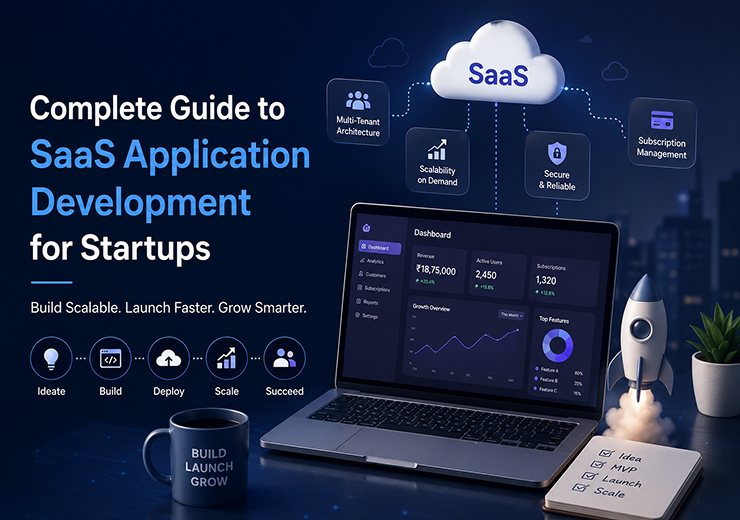
The software industry has undergone a massive transformation over the past decade, and one of the biggest innovations driving this change is SaaS application development. Software as a Service (SaaS) has become the preferred software delivery model for businesses worldwide. Instead of purchasing and installing software on individual computers, users can access applications online through a subscription model.
From startups to large enterprises, organizations are increasingly investing in SaaS solutions because they offer flexibility, scalability, and cost efficiency.
For startups, SaaS presents a unique opportunity to build recurring revenue streams and scale quickly without the limitations of traditional software models.
This guide explores everything startups need to know about SaaS application development, including benefits, key features, development processes, challenges, and future trends.
What is SaaS Application Development?
SaaS application development refers to the process of designing, building, deploying, and maintaining software applications that users access through the internet.
Instead of installing software locally, users subscribe and access it through a web browser or mobile app.
Popular SaaS products include:
· Salesforce
· Zoom
· Dropbox
· HubSpot
· Slack
· Shopify
These applications operate on cloud infrastructure and provide services to multiple customers through a subscription-based model.
Why Startups Prefer SaaS Business Models
Startups choose SaaS because it offers several advantages over traditional software businesses.
Recurring Revenue
Monthly and annual subscriptions generate predictable income.
Lower Customer Entry Barriers
Customers can subscribe without making large upfront investments.
Scalability
Businesses can easily serve thousands of users through cloud infrastructure.
Global Reach
SaaS products can be sold worldwide without geographical limitations.
Faster Updates
New features can be deployed instantly to all users.
Benefits of SaaS Application Development
1. Recurring Revenue Model
One of the biggest advantages of SaaS software development is recurring revenue.
Instead of selling software once, businesses earn revenue through:
· Monthly subscriptions
· Annual subscriptions
· Usage-based pricing
This creates financial stability and predictable growth.
2. Lower Infrastructure Costs
Cloud hosting eliminates the need for expensive hardware investments.
Businesses can scale resources based on demand and only pay for what they use.
3. Easy Accessibility
Users can access SaaS applications from:
· Computers
· Tablets
· Smartphones
This flexibility improves customer satisfaction and usability.
4. Automatic Updates
SaaS applications automatically receive:
· Security patches
· Feature enhancements
· Performance improvements
Users always have access to the latest version.
5. Scalability
Cloud-based infrastructure enables businesses to:
· Add users
· Expand features
· Support growing customer bases
without rebuilding the platform.
Types of SaaS Applications
Customer Relationship Management (CRM)
Examples:
· Salesforce
· HubSpot
Used for managing customer interactions and sales pipelines.
Project Management Software
Examples:
· Trello
· Asana
· Monday.com
Helps teams collaborate efficiently.
Ecommerce SaaS Platforms
Examples:
· Shopify
· BigCommerce
Supports online store management.
Accounting Software
Examples:
· QuickBooks
· Xero
Simplifies financial management.
Communication Platforms
Examples:
· Slack
· Zoom
Enhances team communication and collaboration.
Essential Features of a SaaS Application
User Registration and Authentication
Secure login systems are critical.
Features include:
· Email login
· Social login
· Multi-factor authentication
Subscription Management
Users should be able to:
· Upgrade plans
· Downgrade subscriptions
· Manage billing
Payment Gateway Integration
Popular payment providers include:
· Stripe
· Razorpay
· PayPal
Dashboard and Analytics
Users need access to:
· Reports
· Insights
· Performance metrics
Notifications
Applications should support:
· Email notifications
· Push notifications
· In-app alerts
Role-Based Access Control
Different users may require different permission levels.
SaaS Application Development Process
Step 1: Market Research
Identify:
· Customer pain points
· Competitors
· Market opportunities
This helps validate your SaaS idea.
Step 2: Define Requirements
Document:
· Features
· User roles
· Business objectives
A clear roadmap improves development efficiency.
Step 3: UI/UX Design
Create user-friendly interfaces that enhance user experience.
Good design improves customer retention.
Step 4: Development
Develop core modules such as:
· User management
· Billing systems
· Dashboards
· Integrations
Step 5: Testing
Ensure the application is:
· Secure
· Reliable
· Bug-free
Testing includes:
· Functional testing
· Performance testing
· Security testing
Step 6: Deployment
Deploy the application to cloud infrastructure.
Popular cloud providers include:
· AWS
· Microsoft Azure
· Google Cloud
Step 7: Maintenance and Updates
Continuous improvements ensure long-term success.
Choosing the Right Technology Stack
Frontend Technologies
· React.js
· Angular
· Vue.js
Backend Technologies
· Node.js
· Laravel
· .NET
· Python
Databases
· MySQL
· PostgreSQL
· MongoDB
Cloud Platforms
· AWS
· Azure
· Google Cloud
The right technology stack ensures performance and scalability.
Challenges in SaaS Application Development
Security
Protecting customer data is essential.
Scalability
Applications must support growing user bases.
Customer Retention
Continuous innovation is necessary to reduce churn.
Integration Requirements
Customers often require integration with existing systems.
SaaS Pricing Models
Subscription-Based Pricing
Customers pay monthly or annually.
Freemium Model
Basic features are free, while advanced features require payment.
Usage-Based Pricing
Customers pay based on actual usage.
Tiered Pricing
Different plans offer varying feature sets.
Choosing the right pricing strategy significantly impacts business growth.
Future of SaaS Application Development
Several trends are shaping the future of SaaS.
Artificial Intelligence Integration
AI-powered features improve automation and personalization.
Low-Code Development
Businesses can build solutions faster.
Advanced Analytics
Real-time insights support better decision-making.
Industry-Specific SaaS
Customized SaaS products for specific industries are becoming increasingly popular.
Why Startups Should Invest in SaaS Application Development
Startups benefit from:
· Recurring revenue
· Global scalability
· Lower operational costs
· Faster market expansion
· Better customer retention
These advantages make SaaS one of the most attractive business models today.
How Gladxe Helps Build SaaS Applications
Gladxe specializes in end-to-end SaaS application development services.
Our Services
· SaaS Product Development
· Custom Software Development
· Cloud Application Development
· Mobile App Development
· CRM Development
· ERP Solutions
· API Integrations
We help startups transform innovative ideas into scalable SaaS products.
Conclusion
SaaS application development has become one of the most profitable and scalable business opportunities in the software industry.
With recurring revenue, cloud-based accessibility, and unlimited growth potential, SaaS solutions enable startups to compete effectively in global markets.
Businesses investing in SaaS today position themselves for long-term success and sustainable growth.
Whether you're launching a CRM, project management tool, ecommerce platform, or industry-specific software, SaaS offers a powerful framework for innovation and scalability.
Frequently Asked Questions
What is SaaS application development?
SaaS application development is the process of creating cloud-based software that users access through subscriptions.
Why is SaaS popular among startups?
SaaS provides recurring revenue, scalability, and lower infrastructure costs.
How long does SaaS development take?
Depending on complexity, development can take anywhere from a few months to a year.
What technologies are used for SaaS development?
Popular technologies include React, Node.js, Laravel, Python, AWS, and Azure.
Is SaaS application development profitable?
Yes. SaaS offers predictable recurring revenue and strong growth opportunities.
CTA
Looking for a trusted SaaS Application Development Company in Coimbatore?
Gladxe helps startups and businesses build scalable, secure, and high-performance SaaS products tailored to their unique requirements. Contact our team today to bring your SaaS idea to life.
Ready to elevate your brand and achieve exceptional results? Our team
of creative experts is here to turn your vision into reality.
ⓒCopyright 2026 Gladxe Software Pvt Ltd . All rights reserved


 13 Jun 2026