Phone Number
+91 8111002343

Get Free Quote
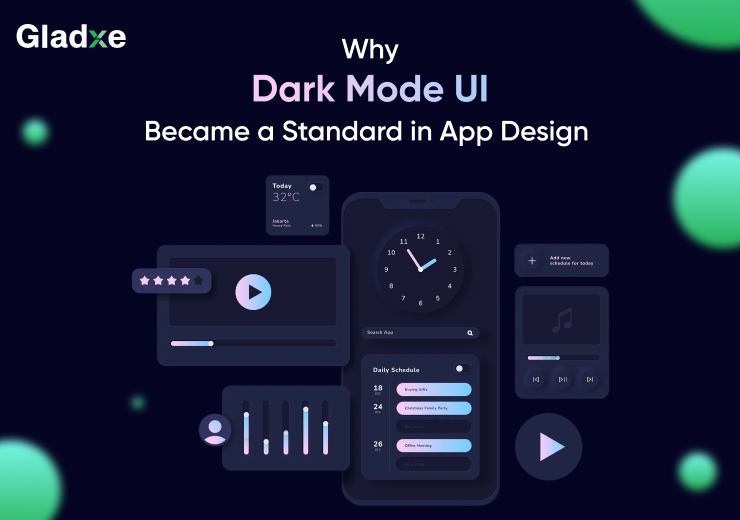
Introduction Between 2021 and 2024, dark mode UI transformed from an optional feature into a standard design practice. What started as a visual preference quickly became a core part of modern app design. Users began expecting apps to support dark mode, not just for aesthetics but for comfort, accessibility, and usability. App designers and businesses responded by making dark mode a default design option. This blog explains why dark mode UI became a standard in app design and how it benefits both users and businesses.
What Is Dark Mode UI
Dark mode UI is a design approach where the interface
uses dark backgrounds with light text and elements.
Instead of bright white screens, dark mode reduces
brightness while maintaining readability. It is commonly used in mobile
apps, websites, operating systems, and software platforms.
Reduced Eye Strain and Better Comfort
One of the biggest reasons for the rise of dark mode is eye
comfort.
Dark mode reduces glare, especially in low light
environments. Users who spend long hours on apps prefer dark interfaces because
they feel less strain on the eyes.
This made dark mode popular among professionals, developers,
and frequent app users.
Improved Battery Performance on Mobile Devices
Dark mode offers battery saving benefits, especially
on OLED and AMOLED screens.
Dark pixels consume less power, helping users extend battery
life. As mobile usage increased between 2021 and 2024, battery efficiency
became a major user concern.
This technical advantage pushed more apps to adopt dark mode
UI.
Better Focus and Content Visibility
Dark backgrounds help content stand out.
Text, icons, and images appear more focused against dark
surfaces. This improves readability, especially for dashboards,
analytics apps, and content heavy platforms.
Dark mode helps reduce distractions and improves user
attention.
Accessibility and Inclusive Design
Accessibility became a key design priority.
Dark mode supports users with light sensitivity,
visual discomfort, and accessibility needs. When combined with proper contrast
and typography, dark mode improves inclusive design.
This made dark mode an important part of UI UX best
practices.
Modern and Premium Visual Appeal
Dark mode creates a modern and premium look.
Apps using dark mode often appear more professional and
visually appealing. This visual trend aligned well with branding strategies,
especially for tech products and SaaS platforms.
Between 2021 and 2024, dark mode became associated with modern
user experience design.
User Control and Personalization
Modern apps focus on user choice.
Providing both light and dark modes allows users to
personalize their experience. Personalization improves user satisfaction
and engagement.
Apps that respect user preferences perform better in long
term retention.
Platform and System Level Support
Major platforms made dark mode standard.
Operating systems like Android, iOS, Windows, and macOS
introduced system wide dark mode. Apps were expected to follow system
preferences automatically.
This platform level adoption made dark mode a necessity
rather than an option.
Performance and Design Efficiency
Dark mode simplifies certain design elements.
Designers can reduce heavy visuals and focus on clarity,
spacing, and hierarchy. Well designed dark interfaces improve performance
perception and reduce visual noise.
Why Businesses Adopted Dark Mode Quickly
Businesses realized that dark mode improves:
Supporting dark mode became a competitive advantage.
Best Practices for Dark Mode UI Design
Effective dark mode design requires:
Poorly designed dark mode can reduce usability, so
thoughtful design is essential.
Conclusion
Between 2021 and 2024, dark mode UI evolved from a
trend into a design standard.
It improved user comfort, accessibility, battery
efficiency, and visual appeal. For modern applications, dark mode is
no longer optional.
Designing apps with thoughtful dark mode support ensures
better user experience and long term success.
Ready to elevate your brand and achieve exceptional results? Our team
of creative experts is here to turn your vision into reality.
ⓒCopyright 2026 Gladxe Software Pvt Ltd . All rights reserved


 16 May 2021