Phone Number
+91 8111002343

Get Free Quote
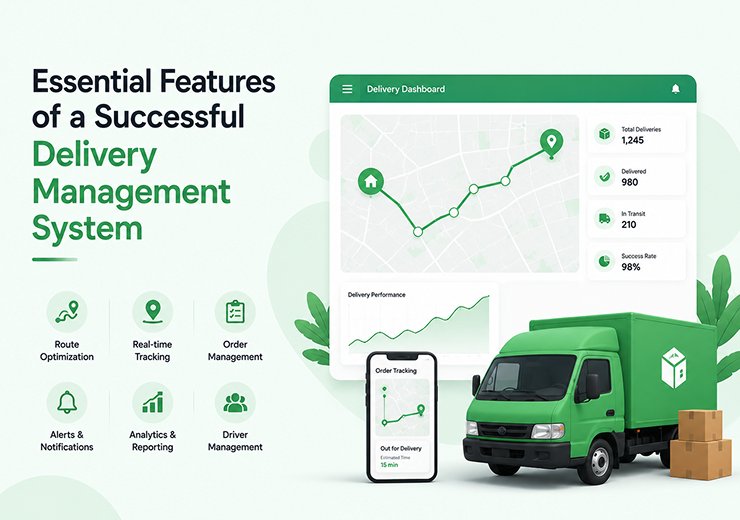
The delivery industry has experienced massive growth in recent years, driven by ecommerce, food delivery, grocery delivery, milk delivery, and logistics businesses. As customer expectations continue to rise, businesses must ensure faster deliveries, accurate tracking, and seamless customer experiences.
Managing deliveries manually is no longer practical. Businesses need advanced technology to streamline operations and maintain efficiency. This is where a delivery management system becomes essential.
A delivery management system helps businesses automate order processing, optimize routes, track drivers, manage fleets, and improve customer communication.
In this blog, we'll explore the essential features every successful delivery management system should have and how it can help businesses improve operations and customer satisfaction.
What is a Delivery Management System?
A delivery management system is software designed to manage, track, and optimize delivery operations.
It helps businesses handle:
· Order assignments
· Route planning
· Driver management
· Delivery tracking
· Customer notifications
· Performance reporting
Whether you're managing 10 deliveries or 10,000 deliveries per day, a delivery management system improves efficiency and reduces operational challenges.
Why Businesses Need a Delivery Management System
Manual delivery management often creates problems such as:
· Delivery delays
· Incorrect route planning
· Communication gaps
· Increased operational costs
· Poor customer experience
A delivery management system helps eliminate these issues through automation and real-time visibility.
1. Order Management
One of the most important features is centralized order management.
The system should allow businesses to:
· Receive orders automatically
· Assign orders to drivers
· Track order status
· Manage cancellations
This ensures smooth delivery operations.
2. Real-Time Delivery Tracking
Customers want visibility into their deliveries.
A delivery management system should provide:
· Live delivery tracking
· Driver location monitoring
· Estimated delivery times
· Status updates
Real-time tracking improves customer confidence and reduces support inquiries.
3. Route Optimization
Efficient route planning is essential for reducing delivery costs.
A good system should:
· Calculate optimal routes
· Avoid traffic congestion
· Minimize fuel consumption
· Reduce travel time
Route optimization improves both efficiency and profitability.
4. Driver Management
Managing delivery personnel effectively is critical.
Driver management features include:
· Driver assignment
· Performance monitoring
· Attendance tracking
· Delivery completion tracking
This improves workforce productivity and accountability.
5. Fleet Management
Businesses with multiple vehicles require fleet management capabilities.
Key features include:
· Vehicle tracking
· Maintenance schedules
· Fuel monitoring
· Fleet utilization reports
Fleet management helps reduce operational costs.
6. Automated Notifications
Customer communication is crucial.
The system should automatically send:
· Order confirmations
· Dispatch notifications
· Delivery updates
· Completion confirmations
Automated communication improves customer experience.
7. Electronic Proof of Delivery (ePOD)
Successful delivery management systems should support:
· Digital signatures
· Delivery photos
· OTP verification
· Customer confirmation
This reduces disputes and improves accountability.
8. Mobile Application for Drivers
A dedicated driver app simplifies delivery operations.
Features include:
· Route navigation
· Order details
· Delivery updates
· Customer contact information
Mobile apps improve driver efficiency.
9. Customer Portal
Customers appreciate self-service options.
A customer portal can provide:
· Order tracking
· Delivery history
· Subscription management
· Support requests
This improves user experience and reduces support workload.
10. Analytics and Reporting
Business decisions should be based on data.
A delivery management system should provide:
· Delivery performance reports
· Driver productivity metrics
· Revenue insights
· Cost analysis
Analytics help businesses identify areas for improvement.
Benefits of a Delivery Management System
Faster Deliveries
Optimized routes reduce delivery times.
Reduced Costs
Automation lowers operational expenses.
Improved Customer Satisfaction
Real-time tracking and communication enhance customer experience.
Better Resource Utilization
Drivers and vehicles are used more efficiently.
Increased Scalability
Businesses can handle larger delivery volumes.
Industries That Need Delivery Management Software
Ecommerce
Order fulfillment and customer tracking.
Food Delivery
Real-time delivery monitoring.
Grocery Delivery
Scheduled and on-demand deliveries.
Milk Delivery
Subscription-based delivery management.
Courier Services
Package tracking and route planning.
Delivery Management System vs Manual Delivery Operations
Feature | Delivery Management System | Manual Process |
Tracking | Real-Time | Limited |
Route Planning | Automated | Manual |
Customer Updates | Instant | Delayed |
Reporting | Automated | Manual |
Scalability | High | Limited |
Modern businesses cannot effectively scale using manual delivery operations.
Future Trends in Delivery Management
AI-Based Route Optimization
Smarter route planning using artificial intelligence.
Predictive Delivery Analytics
Forecast delivery demand accurately.
Automation and Robotics
Reduced manual intervention.
IoT-Based Fleet Monitoring
Real-time vehicle health and performance tracking.
Hyperlocal Delivery Solutions
Faster last-mile delivery systems.
How Gladxe Helps Build Delivery Management Systems
Gladxe develops custom delivery management software tailored to business requirements.
Our Services
· Delivery Management Software Development
· Route Optimization Solutions
· Fleet Management Systems
· Mobile App Development
· SaaS Application Development
· Logistics Software Development
We help businesses automate deliveries, improve efficiency, and enhance customer satisfaction.
Conclusion
A delivery management system is no longer optional for businesses operating in the delivery and logistics industry. From route optimization and real-time tracking to automated notifications and analytics, these systems help businesses improve efficiency and reduce operational costs.
Organizations that invest in delivery management software can provide faster deliveries, improve customer experiences, and achieve sustainable growth.
As delivery expectations continue to increase, businesses must adopt modern technology solutions to remain competitive.
Frequently Asked Questions
What is a delivery management system?
A delivery management system is software that helps businesses manage, track, and optimize delivery operations.
Why is route optimization important?
Route optimization reduces fuel costs, delivery times, and operational expenses.
Can delivery management software improve customer satisfaction?
Yes. Features like tracking, notifications, and faster deliveries improve customer experiences.
Which businesses need delivery management software?
Ecommerce, food delivery, grocery delivery, courier, logistics, and milk delivery businesses.
Is delivery management software scalable?
Yes. It can support businesses of all sizes and handle growing delivery volumes.
CTA
Looking for a reliable Delivery Management Software Development Company in Coimbatore?
Gladxe develops scalable delivery management systems with route optimization, driver tracking, fleet management, and customer engagement features. Contact us today to build your custom delivery solution.
Ready to elevate your brand and achieve exceptional results? Our team
of creative experts is here to turn your vision into reality.
ⓒCopyright 2026 Gladxe Software Pvt Ltd . All rights reserved


 28 Jun 2026