Phone Number
+91 8111002343

Get Free Quote
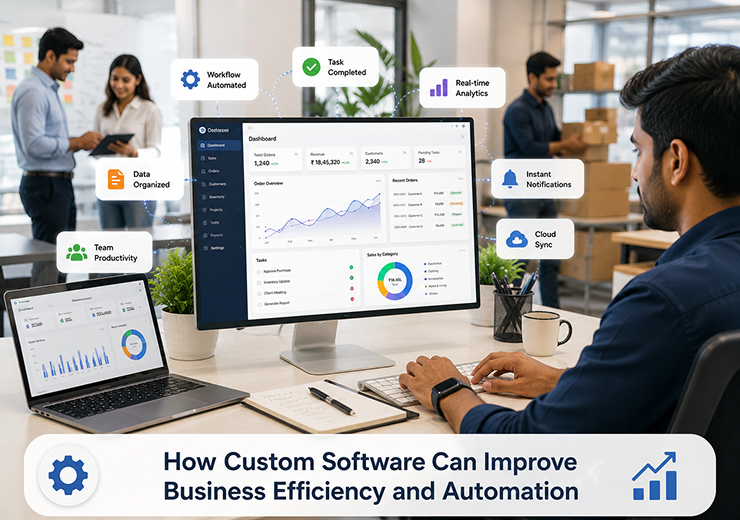
In today’s competitive business environment, efficiency and automation play a major role in business growth. Businesses that rely heavily on manual processes often face delays, operational errors, communication gaps, and reduced productivity.
Many companies use generic software solutions that are not designed specifically for their workflows. This creates inefficiencies because businesses are forced to adjust their operations according to the software instead of using systems built around their actual needs.
Custom software development solves this problem by creating software tailored specifically for a business’s operations, workflow, and goals.
By automating repetitive tasks and streamlining processes, custom software helps businesses improve efficiency, reduce manual effort, and scale operations more effectively.
What Is Custom Software Development?
Custom software development refers to designing and building software specifically for a business’s unique requirements.
Unlike ready-made software, custom solutions are developed to match:
• Business workflows
• Operational requirements
• Customer needs
• Automation goals
• Scalability plans
Examples include:
• CRM systems
• Ecommerce platforms
• Delivery management systems
• ERP software
• Inventory management tools
Custom software is designed to fit the business perfectly rather than forcing the business to adapt to limited software functionality.
Why Businesses Need Custom Software
As businesses grow, operations become more complex.
Common challenges include:
• Repetitive manual tasks
• Data management issues
• Lack of automation
• Communication delays
• Workflow inefficiencies
Generic software often cannot fully solve these problems because it is built for broad usage rather than specific business operations.
Custom software helps businesses create efficient systems that improve productivity and reduce operational complexity.
How Custom Software Improves Business Efficiency
1. Automates Repetitive Tasks
Businesses spend significant time handling repetitive work manually.
Examples include:
• Data entry
• Billing processes
• Order updates
• Inventory tracking
• Customer follow-ups
Automation reduces workload and saves valuable time.
2. Improves Workflow Management
Custom software organizes operations based on business-specific workflows.
Benefits include:
• Better task management
• Faster execution
• Reduced delays
• Improved team coordination
This improves overall operational efficiency.
3. Centralized Data Management
Using multiple disconnected tools often creates confusion and inefficiency.
Custom software centralizes:
• Customer information
• Orders and transactions
• Reports and analytics
• Team communication
This improves accessibility and decision-making.
4. Reduces Human Errors
Manual processes increase the risk of operational mistakes.
Automation reduces:
• Billing errors
• Data duplication
• Missed updates
• Communication mistakes
This improves accuracy and reliability.
5. Enhances Team Productivity
When repetitive tasks are automated, teams can focus on strategic and high-value activities.
Benefits:
• Increased productivity
• Faster operations
• Better business performance
How Custom Software Supports Automation
Workflow Automation
Automates operational processes from start to finish.
Automated Notifications
Businesses can send:
• Order updates
• Payment reminders
• Task notifications
automatically.
Reporting and Analytics
Real-time analytics help businesses monitor performance and make better decisions.
Integration with Existing Systems
Custom software integrates with:
• CRM platforms
• Payment gateways
• Delivery systems
• Marketing tools
This creates a seamless operational environment.
Key Features of Custom Business Software
• Role-based access control
• Workflow automation
• Dashboard management
• Real-time analytics
• Integration capabilities
• Scalable architecture
These features help businesses manage operations efficiently.
Common Mistakes to Avoid
• Using too many disconnected tools
• Relying entirely on manual operations
• Choosing software without scalability
• Ignoring automation opportunities
• Not planning workflows properly
Avoiding these mistakes improves business efficiency.
How to Choose the Right Custom Software Solution
Step 1: Identify operational challenges
Step 2: Define automation goals
Step 3: List required features
Step 4: Choose experienced developers
Step 5: Focus on scalability and long-term growth
Choosing the right solution is critical for business success.
Business Benefits of Custom Software
Custom software helps businesses:
• Improve operational efficiency
• Reduce manual workload
• Automate workflows
• Improve accuracy
• Scale operations faster
Conclusion
Custom software development is not just about building technology — it is about improving business efficiency, productivity, and scalability.
Businesses that invest in tailored software solutions gain better operational control, improved workflow management, and long-term growth opportunities.
In today’s digital business environment, automation and efficiency are essential for staying competitive, and custom software plays a major role in achieving that success.
Ready to elevate your brand and achieve exceptional results? Our team
of creative experts is here to turn your vision into reality.
ⓒCopyright 2026 Gladxe Software Pvt Ltd . All rights reserved


 11 May 2026