Phone Number
+91 8111002343

Get Free Quote
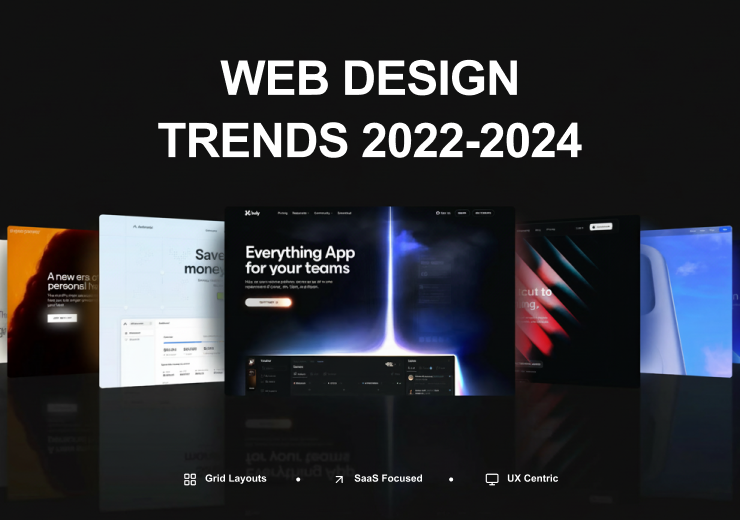
Introduction Between 2022 and 2024, web design evolved rapidly. Websites were no longer judged only by visual appearance, but by performance, usability, and user experience. Businesses realized that design directly impacts trust, engagement, and conversions. As user expectations increased, web design trends shifted toward speed, clarity, accessibility, and interaction. This blog explains the key web design trends that dominated 2022–2024 and why they continue to influence modern website design.
1. Minimal and Clean Layouts
Minimal web design remained one of the strongest
trends.
Designers focused on white space, clear typography,
and fewer distractions. Clean layouts improved readability, user
focus, and content clarity.
This trend also supported faster loading times and better
mobile performance.
2. Mobile First Design
Mobile first design became a standard practice.
Designs were created primarily for mobile users and
then adapted for desktops. This approach improved usability, page
speed, and SEO performance.
3. Dark Mode Interfaces
Dark mode design gained widespread popularity.
Dark themes reduced eye strain, improved contrast,
and delivered a modern user interface. Many websites allowed users to
switch between light and dark modes.
4. Bold Typography
Typography driven design became a core trend.
Large headlines, bold fonts, and expressive typefaces
helped communicate brand personality and create visual hierarchy.
5. Micro Interactions
Micro interactions enhanced overall user
experience.
Hover effects, button animations, and subtle feedback made
websites feel more interactive and responsive, increasing user
engagement.
6. Scroll Based Animations
Scroll triggered animations became more refined.
Content appeared smoothly while scrolling, creating a dynamic
browsing experience and improving storytelling.
7. Performance Focused Design
Website performance became a design priority.
Designers optimized images, animations, and scripts
to improve page speed. Performance focused design improved SEO
rankings and user retention.
8. Accessibility First Approach
Web accessibility gained strong importance.
Designs included readable fonts, proper color
contrast, keyboard navigation, and screen reader compatibility,
ensuring a better experience for all users.
9. Card Based Layouts
Card based layouts became widely used.
Cards helped organize content into clear sections,
improving content scanning and user navigation, especially for
blogs and dashboards.
10. Custom Illustrations and Graphics
Custom illustrations replaced generic stock images.
Unique visuals improved brand identity, storytelling,
and user connection, helping brands stand out.
11. Asymmetrical Layouts
Asymmetrical web layouts added creativity.
Designers experimented with non traditional layouts
while maintaining visual balance and usability.
12. Integration of Video Content
Video content became a core design element.
Background videos, explainer videos, and product demos
improved engagement and time spent on site when used
strategically.
Why These Web Design Trends Matter for Businesses
These modern web design trends focused on:
Websites designed using these trends achieved higher
conversions and better customer trust.
How Businesses Can Apply These Trends
Businesses should not blindly follow trends.
Instead, they should apply web design trends based on
business goals, target audience, and performance requirements.
Combining modern design, usability, and speed delivers the
best results.
Frequently Asked Questions
Are these web design trends still relevant
Yes, most 2022–2024 web design trends continue to shape modern websites.
Should every website follow all trends
No, trends should be selected based on business needs.
Does web design impact SEO
Yes, page speed, mobile optimization, and user experience
directly affect SEO.
Is redesigning a website necessary
Periodic redesign helps maintain relevance, performance, and user
trust.
Conclusion
Web design from 2022 to 2024 focused on simplicity,
performance, and experience.
Businesses that adopted these web design trends
achieved better engagement, trust, and conversions. Modern
web design is a business growth tool, not just a visual upgrade.
Ready to elevate your brand and achieve exceptional results? Our team
of creative experts is here to turn your vision into reality.
ⓒCopyright 2026 Gladxe Software Pvt Ltd . All rights reserved


 14 Mar 2022